
OSINT Repos Intelligence Pack update: 01.05.2026
3736 Repositories full Dataset, 54 newly weekly additions since last update

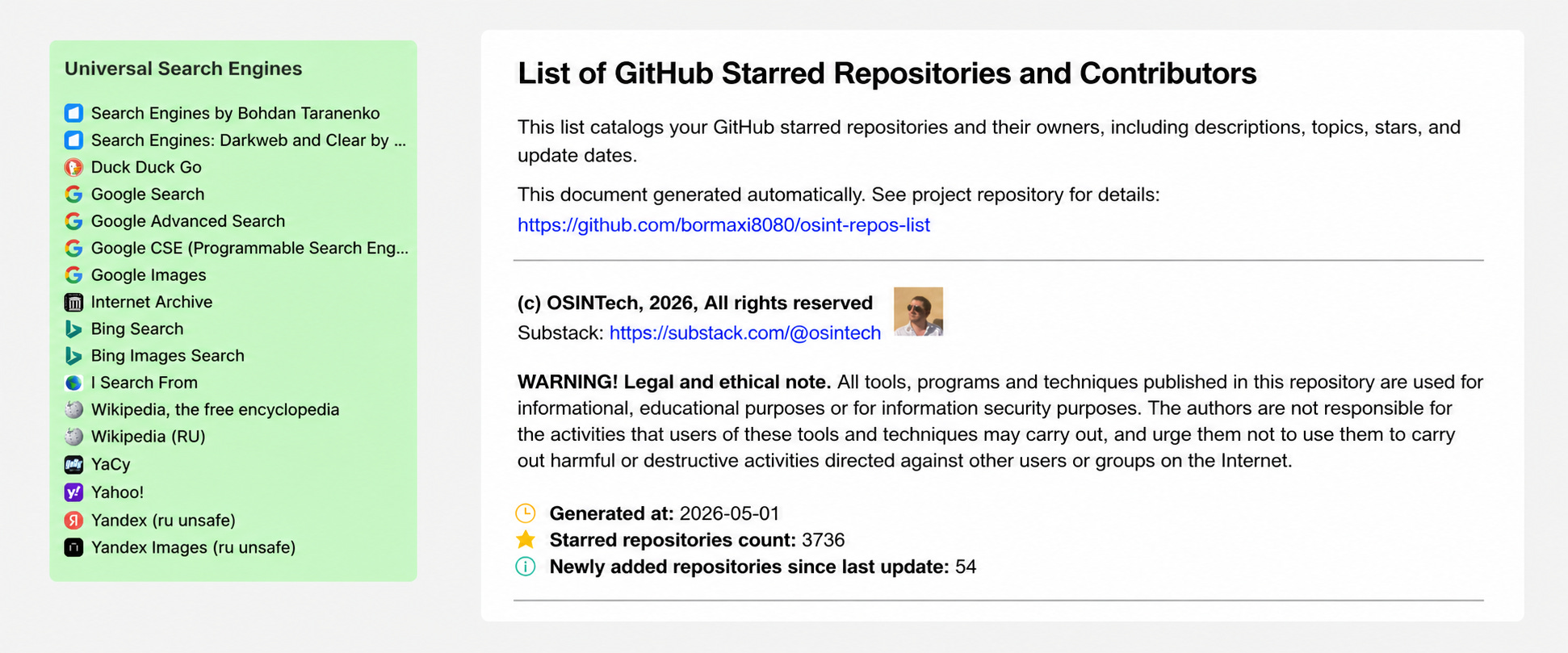
📌 OSINT Repos Intelligence Pack — Why This Dataset Exists?
Most OSINT and investigative work eventually runs into the same problem:
Tools accumulate faster than they can be meaningfully documented.
Bookmarks grow.
Starred repositories multiply.
Links are saved “for later” — and quietly forgotten.
Over time, it becomes increasingly difficult to answer simple questions:
Which tools are actually used?
Which repositories are actively maintained?
Which utilities are practical, and which are merely theoretical?
OSINT Repos Intelligence Pack exists as an attempt to address this problem and relized continuously updated, structured OSINT tooling dataset for investigators, journalists, analysts, and security researchers
📌 What this dataset is?
OSINT Repos Intelligence Pack is a structured dataset built from an actively used working environment.
It documents open-source repositories related to:
OSINT and open-source investigations,
Data collection and analysis,
Software development and automation,
DevOps and infrastructure tooling,
Information security and research utilities.
The dataset is not a curated “top tools” list and not a recommendation catalog.
It reflects what is actually being used, tested, evaluated and maintained over time.
📌 Why this approach matters?
Traditional OSINT lists tend to be static.
They age quickly, lose context and fail to reflect real-world usage.
This dataset is different in several ways:
It grows automatically,
It preserves metadata such as update activity and popularity,
It reflects a long-term working toolchain rather than a one-time selection,
It allows patterns and trends to emerge naturally.
Instead of asking “what tools should I use?”, the dataset helps answer:
“What tools are people actually using in practice?”
📌 What kind of information it contains?
Each entry in the dataset includes:
Repository name and owner,
Short description,
Associated topics and tags,
Popularity indicators,
Update timestamps.
This makes it possible to explore the dataset not only as a list of tools,
but also as a reference for understanding how the open-source OSINT ecosystem evolves.
Because metadata is preserved, the dataset can be used analytically — not just descriptively.
📌 Where to Follow?
Substack:

📌 Weekly Update — Selected Additions
Below are three selected examples from the most recent update cycle.
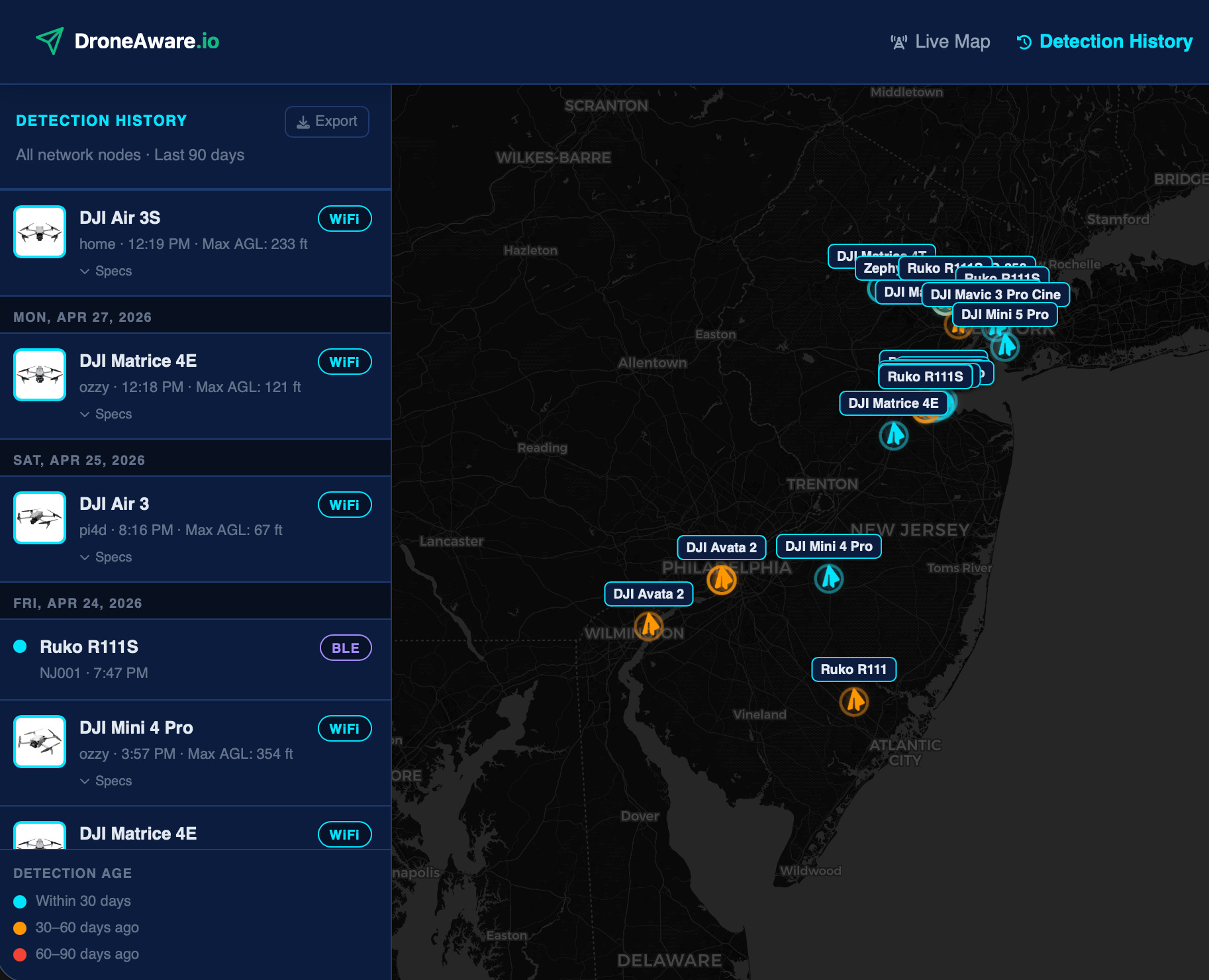
TOOL OF THE WEEK
DroneAware Node Releases repository
🔗 https://github.com/fduflyer/DroneAware-Node-Releases
design-md-chrome. Chrome extension to extract styles from any website and generate DESIGN.md files and design skills for AI based on TypeUI
🔗 https://github.com/bergside/design-md-chrome/

HomeDockOS. An intuitive, versatile, and powerful home server operating system for self-hosting. Featuring a curated app store and seamless multi-platform support, it’s designed to empower your personal cloud on Raspberry Pi, x86 systems, or your preferred setup
🔗 https://github.com/BansheeTech/HomeDockOS

📌 Intended use
OSINT Repos Intelligence Pack is designed for:
Investigators and researchers,
Journalists and analysts,
Engineers and automation specialists,
Information security practitioners.
It can be used as:
A discovery aid,
A structured tooling archive,
A way to cross-check tooling choices,
A snapshot of a working OSINT environment at a given point in time,
A reference baseline for comparing future tooling shifts.
The full archive version of the dataset is available below for subscribers.
